
How a local town used an AI community tool to improve public safety
A Quick Summary
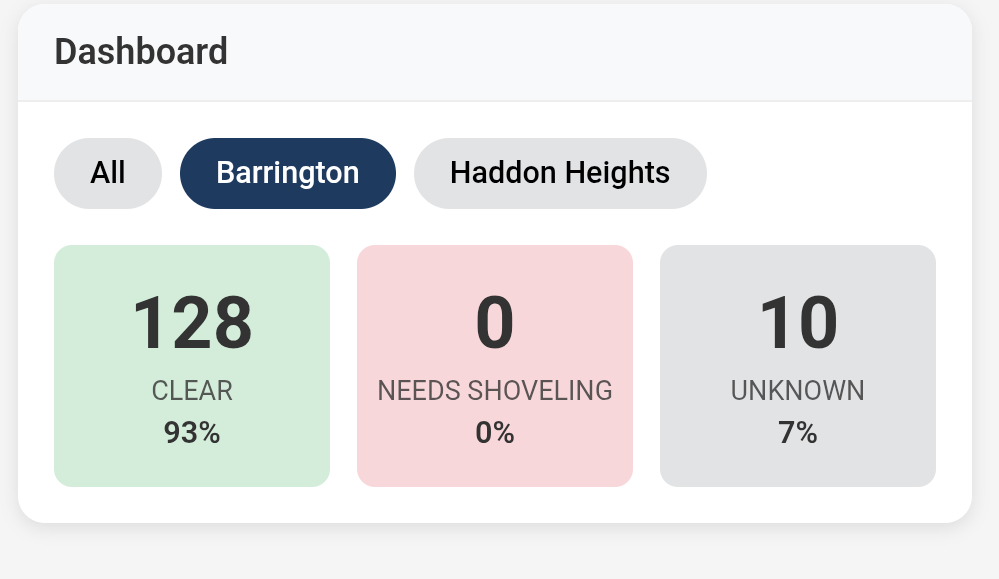
During the late January snowstorm in Barrington, New Jersey, the Hydrant Snow Tracker achieved 100% hydrant coverage through community participation.
What started as a resident-built, AI-assisted community tool became a shared operational view for residents, borough leadership, and the fire department. After seeing full hydrant completion in a live weather event, borough and fire department channels helped amplify the tool, and the community is actively using it again.
Problem Statement
Snow-buried hydrants create a predictable but hard-to-manage public safety risk. Municipal ordinances exist, but it is difficult to coordinate or verify hydrant readiness at street level in real time.
The operational question is simple: how do you quickly convert distributed volunteer effort into reliable, actionable hydrant status data during a storm?
Deployment Model
The tool followed a low-friction adoption model:
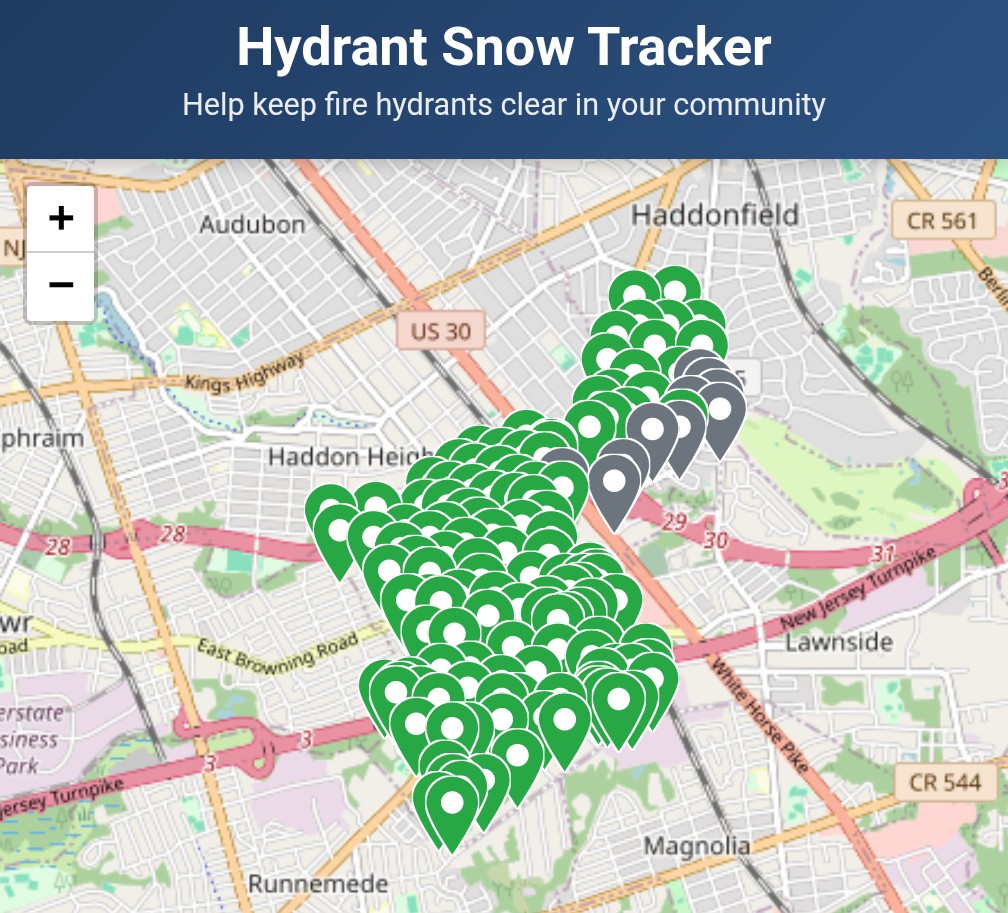
- Publish a mobile-friendly hydrant map.
- Let residents report hydrant status in seconds.
- Show updates in real time so every participant sees the same ground truth.
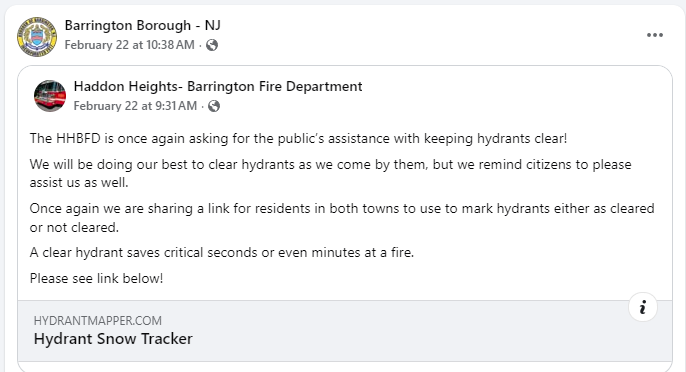
- Share through trusted local channels where community context and accountability already exist.
This approach kept participation costs low while increasing response visibility for public safety stakeholders.
Evidence From Barrington, NJ
The latest storm provided a real-world validation window:
- Coverage outcome: 100% of Barrington hydrants were completed.
- Operational effect: responders and borough stakeholders gained full-map visibility on hydrant readiness.
- Adoption effect: success drove borough and fire department sharing, which expanded repeat community participation.
Why This Validates the Concept
This result supports the core thesis: community reporting can materially improve public safety readiness when the system is:
- Fast enough for real conditions
- Simple enough for broad participation
- Visible enough for departments to act on
- Trusted enough to be shared by public institutions
In short, the tool moved from “helpful prototype” to “adopted civic workflow.”
Implications for Other Municipalities
The Barrington outcome suggests a repeatable playbook for similar towns:
- Start with a clean hydrant dataset and simple reporting workflow.
- Launch through local trusted networks first.
- Measure participation and coverage in live events.
- Bring fire department and borough communications in once early signal is strong.
When seconds count, coverage is not a vanity metric. It is operational preparedness.
This is a community-powered status tool, and all reported hydrant conditions should be visually verified in the field before operational decisions are finalized.